





Audio Storytelling for Healthcare Brands: A 2026 Producer's Guide
Audio has grown into one of the more durable channels for healthcare communication, in part because it fits into the gaps of a clinician's or caregiver's day — commutes, workouts, and downtime between shifts. Industry measurement firms such as Edison Research have reported year-over-year growth in podcast listening in the United States, and healthcare-adjacent shows have benefited from that broader trend, though results vary widely by topic, host credibility, and production consistency.
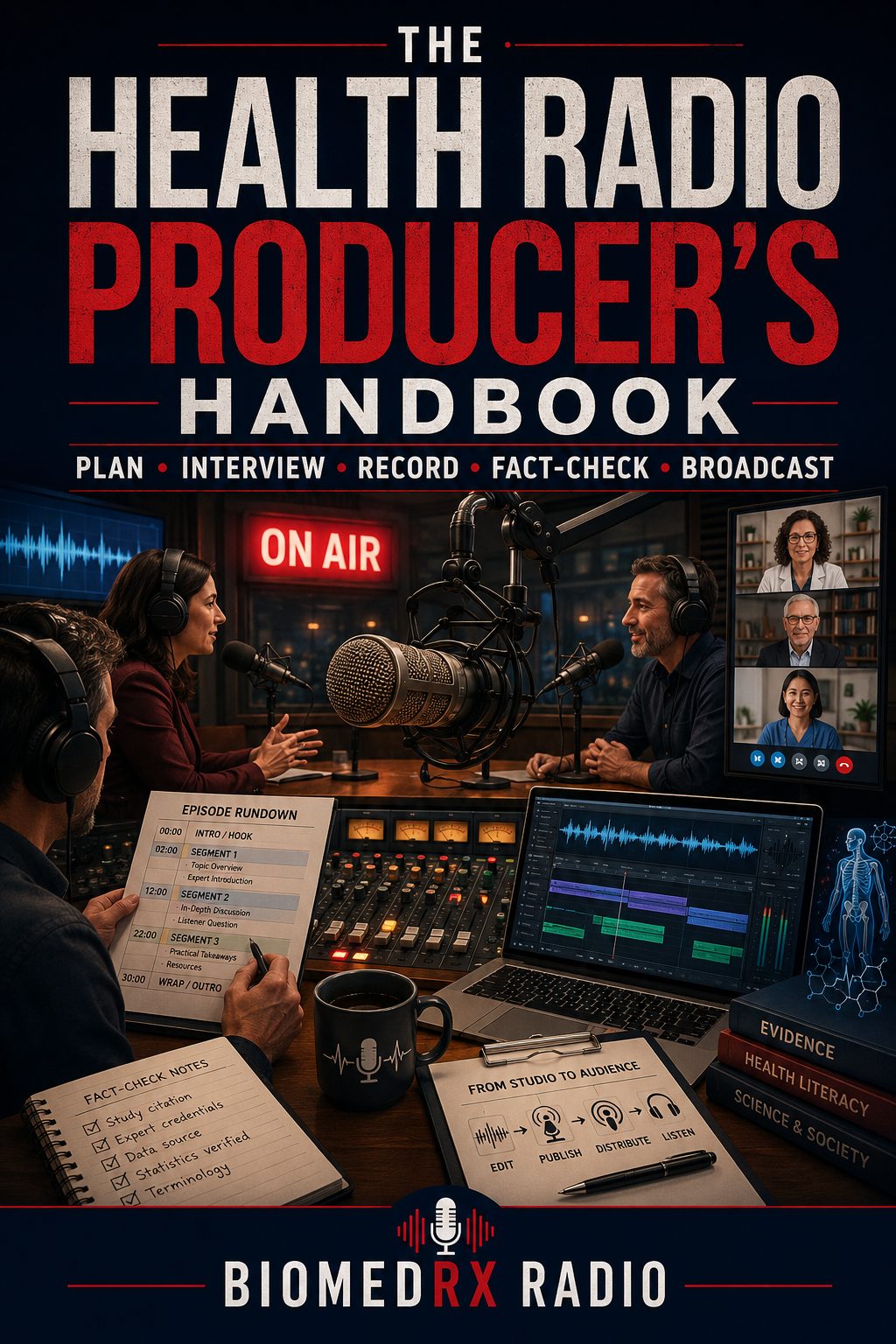
Our guide walks through the practical building blocks: a repeatable production workflow, sourcing credible guests (and vetting their claims), and distribution across the major directories governed by open RSS standards. We also cover monetization honestly — sponsorships, memberships, and institutional underwriting each carry trade-offs, and none is a guaranteed revenue path. Growth for most shows is incremental rather than viral.
One caution worth stating plainly: audio programming aimed at patients or the public should not substitute for individualized medical advice. Any health guidance shared on air is general in nature, and listeners should consult a qualified healthcare provider about their own situation.
The tailwind behind that guidance is real and growing. Edison Research’s Infinite Dial 2026 reports that monthly podcast listening in the U.S. reached a record 58% of the population — roughly 167 million people — while weekly listening climbed to about 45%, and video-capable platforms now rival audio-only apps as the front door to new shows. For a healthcare brand, that reach only matters if the science is right: we pair narrative craft with careful sourcing and clear disclaimers, because trust — not just downloads — is what turns a listener into a patient or partner.
Sources: FCC; NIH; Edison Research — The Infinite Dial 2026